
10K vs 14K vs 18K vs 22K gold: which karat sells in which market?
By Siona Jewels team · Updated
Short answer
In the US and Canada, 10K is the usual entry karat, 14K the everyday standard and 18K the bridal step up. Plain gold in India is mostly 22K, on the World Gold Council's research, and in the UAE it's 22K or 21K. India's BIS grades run from 9K to 24K, with no 10K or 21K.
Karat is the first line on a gold jewellery spec, and it decides more than colour. It sets how much fine gold the piece contains, how much the piece weighs, how it wears, and which marks it may carry in the market you sell to. A ring that sells well in 14K in Toronto could be the wrong product in 22K for a Dubai counter, even with the same CAD file behind both.
This guide is for retail buyers and brand founders choosing karats for the US, Canada, the UAE and India. It covers what each market allows and marks, how 10K, 14K and 18K compare for North America, why 21K and 22K dominate plain gold in the Gulf and India, and why a higher karat costs more than its purity alone suggests. It ends with a karat-by-piece table and the stamping rules for each market.
What does gold karat mean, and which karats does each market recognise?
A karat is one 24th part of the metal, so 14K is 14/24, or 58.5% gold, and 22K is 91.6%. Each market marks purity differently. The US FTC Jewelry Guides give "9 Karat Gold" as an acceptable marking, while India's BIS hallmark uses parts per thousand, such as 916 for 22K.
The legal picture is uneven. Since the FTC's 2018 revision, the US has had no karat floor: gold terms can describe alloys "above or below 10 karats" if an accurate karat mark sits alongside. Canada's Precious Metals Marking Regulations set 9 karats as the minimum for a gold quality mark. In practice, 10K is the usual entry karat in North America, and it's stamped "10K".
Market | Karats recognised | How purity is marked |
|---|---|---|
United States | No legal floor since 2018; 9K given as an example; 10K the usual entry | Karat stamp, e.g. "10K", "14K" |
Canada | 9K minimum for a gold quality mark | Karat or decimal, e.g. "14K" |
United Kingdom (context) | 9K, 14K, 18K, 22K, plus 990 and 999 | 375, 585, 750, 916, 990, 999 |
India (BIS) | 24K, 23K, 22K, 20K, 18K, 14K, 9K | 999/995, 958, 916, 833, 750, 585, 375 |
UAE (Dubai Central Laboratory) | 24K, 22K, 21K, 18K, 16K, 14K, 12K | 999, 916, 875, 750, 666, 583, 500 |
The UK list comes from the British Hallmarking Council's fineness guidance, and it's there for context only, since none of this guide's markets uses it. India's BIS grades gained 9K (375) in July 2025, but they still have no 10K or 21K. A 10K line made for the US can't be BIS-hallmarked as 10K for sale in India. The Dubai marks follow the Dubai Central Laboratory's fineness list, as reported by Gulf News in 2019, which writes 14K as 583 rather than 585.
10K vs 14K vs 18K gold: which suits the US and Canada?
For North American retail, 14K is the everyday standard, 10K reaches lower price points and 18K is the bridal step up. At $4,032 an ounce on 23 October 2026, a 4 g ring held 1.67 g of fine gold in 10K (4 × 0.417), 2.34 g in 14K and 3.00 g in 18K.
That arithmetic is why the three karats sit at different price points rather than competing for the same customer. 18K carries 80% more gold than 10K (3.00 ÷ 1.67), and fine gold was about $129.63 a gram that day (4,032 ÷ 31.1035). The fine gold in that 4 g ring was worth about $216 in 10K, $303 in 14K and $389 in 18K, before labour, stones or margin. Weight also shifts by karat, which the density section below works through.
| 10K | 14K | 18K |
|---|---|---|---|
Gold content | 41.7% | 58.5% | 75% |
Colour (yellow) | Paler, slightly brassy | Warm mid-yellow | Rich yellow |
Wear | Hardest of the three, resists scratches and bending | Good balance for daily wear | Softer; prongs and thin shanks wear faster |
Best for | Entry-price bands, chains, men's rings, fashion lines | Engagement rings, everyday fine jewellery | Bridal, higher-value diamond pieces |
Colour is where buyers notice the difference first. Lower karats carry more copper and silver, so 10K yellow reads paler than 18K side by side. For a store with mixed price bands, a common pattern is the same hero designs in 14K, with 10K versions for gifting price points and 18K for bridal.
21K vs 22K gold: what sells in the UAE and India?
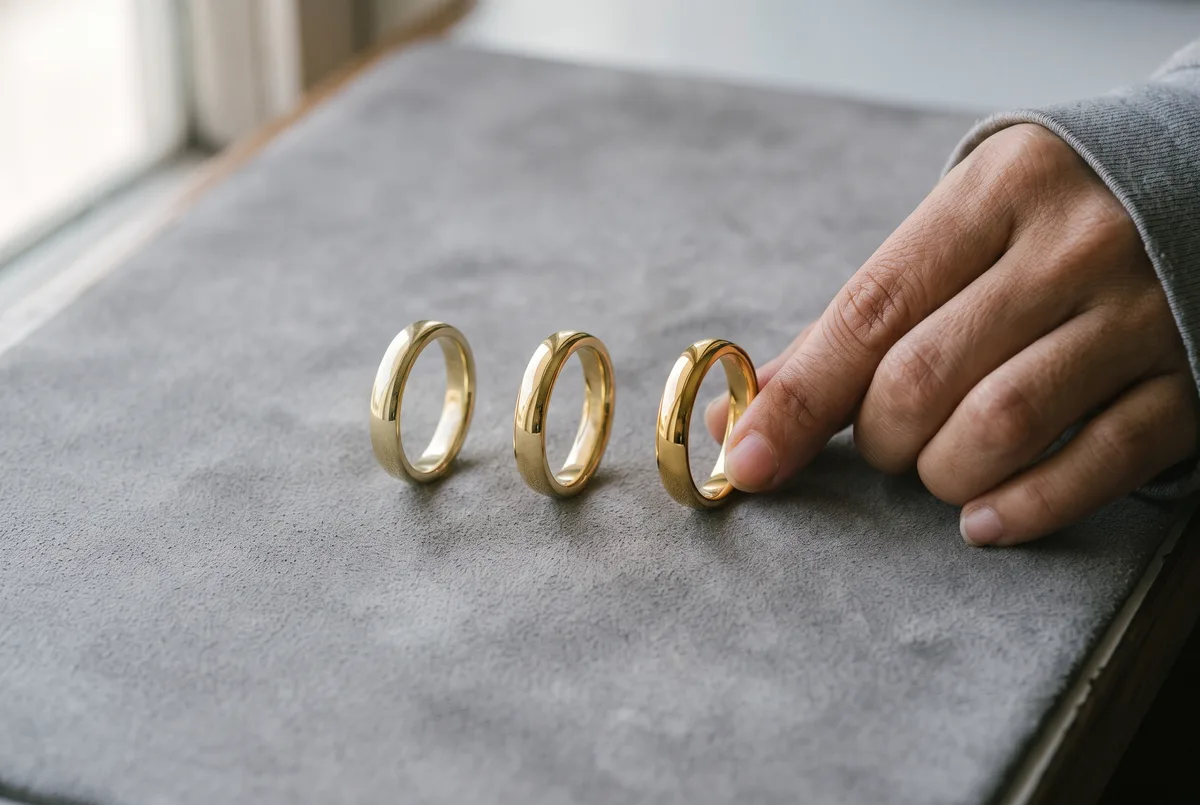
In the UAE, plain gold jewellery is mostly 22K or 21K. A dated estimate from The National in August 2011 put 22K at more than half of UAE gold purchases and 21K at about 20%, with Arab customers usually choosing 21K.
More recent reporting points the same way. A Dubai trader told Khaleej Times in March 2025 that Indian nationals prefer 22K and Arab nationals opt for 21K.
The same report noted a shift as prices rose. Retailers described rising demand for 18K for gifting and occasional wear, while buyers focused on gold as savings still favoured 22K or 24K. For a UAE assortment, that points to 22K and 21K for plain gold, chains and bangles, and 18K for diamond and fashion pieces.
India is more settled. The World Gold Council states that most plain gold jewellery sold in India is 22-carat, and notes growing demand for 18K and 14K in lighter, everyday and fashion pieces. For diamond jewellery, 18K or 14K is the practical choice, because harder alloys hold settings better and keep a studded piece's price within reach.
The difference between 21K and 22K is 4.1 percentage points of gold (91.6% against 87.5%). Both are soft enough that a design needs to allow for it: thicker sections, no fine prongs on large stones, and a close look at clasps.
Weight, density and price: why higher karat costs more than its purity
A higher karat costs more for two reasons, not one. It contains a larger share of gold, and gold is dense, so the same design simply weighs more. Pure gold has a density of 19.32 g/cm³ according to the LBMA, against 15.4 for an 18K alloy with equal parts silver and copper.
Lower karats are lighter still. LibreTexts' chemistry tables put 14K alloys at 12.9–14.6 g/cm³, depending on the mix. A 22K alloy with its 8.4% balance split evenly between silver and copper works out at about 17.8 g/cm³ (1 ÷ [0.916/19.32 + 0.042/10.49 + 0.042/8.96]). Against the middle of the 14K range, 13.2–14.2 g/cm³, the same design in 22K weighs roughly 25–35% more.
Here's what that does to a quote. Take a plain band whose CAD model has a volume of 0.30 cm³, and gold at $129.63 a gram (the 23 October 2026 price above).
Karat | Density used (g/cm³) | Band weight | Fine gold | Fine gold value |
|---|---|---|---|---|
14K | 13.7 (mid-range) | 4.11 g | 2.40 g | about $312 |
18K | 15.4 (LBMA) | 4.62 g | 3.47 g | about $449 |
22K | 17.8 (calculated) | 5.34 g | 4.89 g | about $634 |
The 22K band is 30% heavier than the 14K one (5.34 ÷ 4.11), and it holds about twice the fine gold (4.89 ÷ 2.40 = 2.04). So the gold cost roughly doubles, not the 57% that purity alone (91.6 ÷ 58.5) would suggest. Making charges are often quoted per gram, so labour rises with the weight too, as making charges on gold explained shows.
Ask for a target weight per karat when you approve a design. A manufacturer can thin a 22K section to bring the weight down, but only so far before the piece bends in wear.
How do colour, hardness and white gold change with karat?
Lower karats are harder and paler; higher karats are softer and richer in colour. White gold adds a further choice of whitening metal. The American Academy of Pediatrics calls nickel the No. 1 confirmed contact allergen in the US, and notes it's used to harden gold, which is why the alloy behind white gold matters.
White gold is whitened with nickel or palladium. A trade article on white gold alloys by Stewart Grice describes nickel whites as inexpensive but harder to work, and notes that some people are allergic to nickel. Palladium whites avoid nickel, but palladium's price has made those alloys expensive. Many white golds aren't a bright white on their own; Grice notes that most 10K nickel-free alloys need rhodium plating to reach the best colour, and rhodium is the usual finish across karats.
Rhodium wears. The same article warns that plating protects only "for so long", and once it wears through, the base colour shows again. Tell customers that white gold rings need re-plating from time to time, and price that service into aftercare. If you sell to customers with nickel sensitivity, specify palladium white gold in writing, because a plated nickel alloy looks the same on the counter.
Rose gold gets its colour from copper. Hardness changes with karat, alloy and how the metal was worked, so ask your manufacturer which alloy they use for each karat and colour rather than assuming two 14K whites behave alike.
Which karat should you choose for each piece?
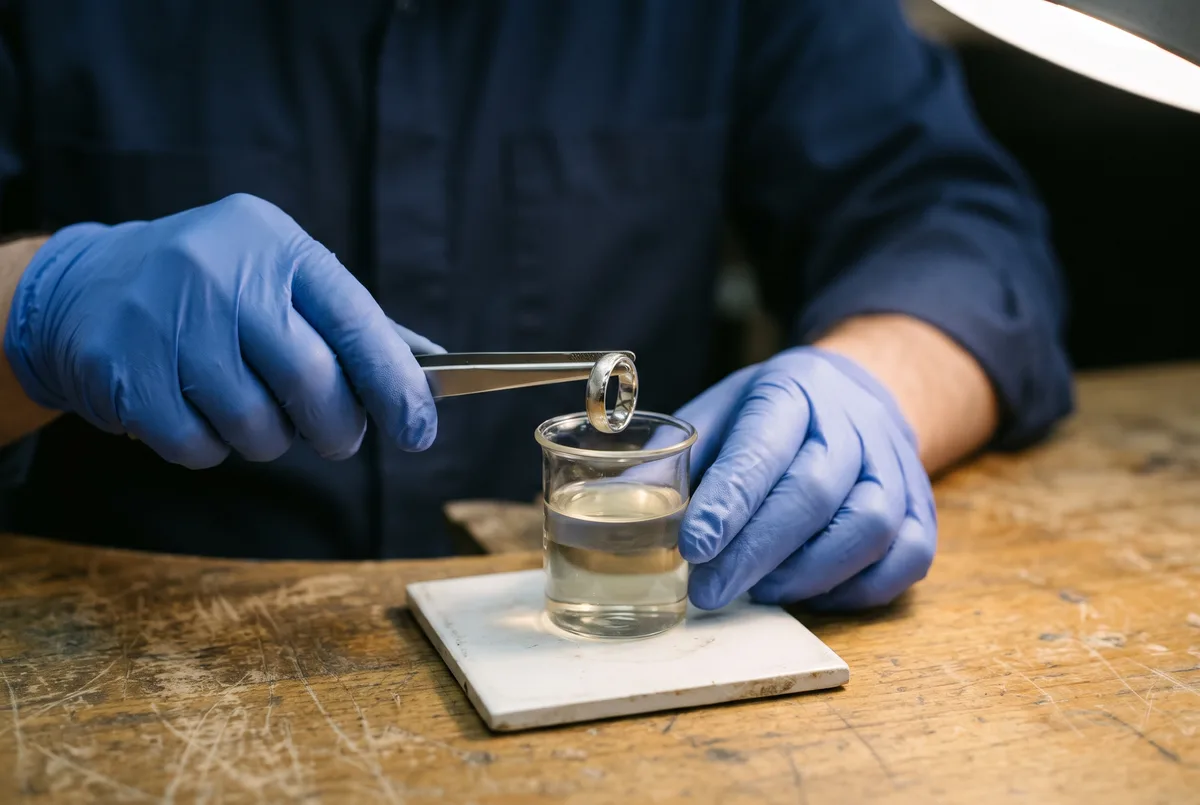
Match the karat to the piece's job and its market. Prongs, thin shanks and chains want harder alloys; plain bangles and wedding sets in the Gulf and India want high-karat colour. The WGC's note that India's plain gold is mostly 22K while 18K and 14K grow in lighter pieces is a useful rule of thumb for studded work.
Piece | US / Canada | UAE | India |
|---|---|---|---|
Diamond engagement ring | 14K; 18K for bridal premium | 18K | 18K |
Plain wedding band | 10K, 14K or 18K | 18K, 21K or 22K | 22K or 18K |
Diamond studs, tennis bracelets | 14K | 18K | 18K or 14K |
Plain bangles, kada | 14K (rarely 10K) | 22K or 21K | 22K |
Chains | 10K or 14K | 21K or 22K | 22K, with 18K for lighter styles |
Entry-price fashion pieces | 10K | 18K | 14K or 9K |
Two cautions sit behind the table. A diamond ring in 22K is possible, but soft prongs need more frequent checks, so most buyers keep studded pieces at 18K or below. And a 10K piece can't be hallmarked as 10K under BIS, so a shared design for India and the US usually means making it in 14K or 18K for both. Browse our designs to see which styles suit which karats.
Stamping and hallmarking rules by market
Each market has its own marking law, and the mark goes on before the piece ships. In the US, 15 U.S.C. §297 says that any piece carrying a quality mark like "14K" must also carry a registered (or applied-for) trademark or the name of the maker or importer.
United States. Under §297, the trademark has to be applied by the same method as the karat mark, in lettering at least as large, and as close to it as possible. The rule covers importers as well as manufacturers, so pieces need the trademark stamped before export. US duty on Indian gold jewellery is covered in US import duty on jewellery from India.
Canada. The Precious Metals Marking Act makes quality marks optional ("may be applied"), but if one is used, section 4(3) requires a trademark that is registered in Canada or has a filed application.
India. BIS hallmarking is mandatory only in notified districts: 392 as of 3 August 2026. BIS lists exemptions that include articles under two grams, jewellers with turnover up to ₹40 lakh, kundan, polki and jadau, and exports made to a foreign buyer's specification. A hallmarked piece carries the BIS mark, purity grade and a six-digit HUID; where it fits in production is in how jewellery is made.
UAE. Gulf News reported in July 2025 that gold sold by licensed retailers must carry a certified hallmark approved by the Dubai Central Laboratory, showing karat, manufacturer's mark and a certification number.
At Siona we stamp with the client's trademark for US and Canadian orders and supply BIS-hallmarked gold for India. Whoever makes your goods, confirm the exact marks in writing on the purchase order. Paperwork and duty for each route are in shipping jewellery from India to the US, Canada and the UAE.
What to do next
Start from the market and price point, then pick the karat, then the design weight. Ask for the CAD volume and a target weight in every karat you plan to sell. If India is a market, drop 10K from shared designs, because BIS hallmarking grades don't include it.
If white gold matters, specify the alloy, and get the gold-rate basis in writing. For a full line-by-line costing, see what jewellery costs to make. When you're ready to cost a range, send us your brief.
Planning a range?
Send us your designs, metals and quantities, and we’ll reply with a quote and timeline within one business day.
Questions buyers ask
Usually, yes. One CAD file can be cast in 10K, 14K, 18K or 22K, but the weight changes with density: the same band is about 30% heavier in 22K than in a mid-range 14K. Very fine sections may need thickening for 21K or 22K, which are soft, so confirm the design with your manufacturer for each karat.
Yes. 10K is 41.7% fine gold, and the US FTC Jewelry Guides allow any gold alloy to be called gold if an accurate karat mark, such as "10K", appears alongside. Canada's regulations allow gold quality marks from 9 karats. India's BIS grades skip 10K, so 10K suits North America rather than India.
Fourteen 24ths is 58.33%, so 583 is the exact figure, and Dubai Central Laboratory's fineness list uses it. India's BIS grades and the UK use 585, a rounded standard that sits slightly above the exact fraction. When you order 14K for both markets, confirm which mark each batch carries.
Generally, yes. At 91.6% gold, 22K has little alloy to harden it, which is why the WGC's research shows India's plain gold in 22K but growing demand for 18K and 14K in lighter, everyday pieces. Keep 22K for bangles, chains and plain bands, and use 18K or lower where prongs hold stones.
The US base duty under HTS 7113.19.50 is a percentage of value (5.5%), not a rate per karat, so a higher karat pays more only because it's worth more. As of October 2026, Indian gold jewellery also carries a 10% Section 301 tariff. Check current rates with a customs broker before each order.